OEM Buyer's Guide
When you shortlist custom backpack manufacturers, the sales pitch is rarely the problem. Almost every factory claims full OEM service. The differences show up in the details: how much of the customization menu is actually documented, how branding methods are priced, and how MOQ tiers are structured across styles. This article gives you a buyer-side framework for evaluating those three areas, using the documented backpack program from Wellmax Luggage, a Quanzhou-based OEM/ODM bag manufacturer founded in 2013, as a concrete benchmark.
What this guide covers
- Auditing the OEM customization menu first
- Comparing branding methods by cost and signal
- Reading MOQ tiers and lead-time structure
- Sampling workflow and factory-level capability checks
- FAQ and a quotation request checklist
Why the Customization Menu Is the First Thing to Audit
A serious OEM should be able to tell you exactly which parameters you can change on a given style, not just say "anything is possible." Vague answers usually mean the factory is reselling your development work or lacks in-house design capability.
Wellmax's backpack catalog, which you can browse on the backpack category page, documents a four-part customization menu on its Technical Daypack 25L that illustrates what a transparent program looks like:
- Fabric and coating: base fabric, denier, and water-resistant coating level matched to the buyer's price point and target climate.
- Color and trim: shell color, zipper pulls, and webbing adapted to a seasonal palette.
- Organization: laptop sleeve size, pocket layout, and divider positions adjusted to the buyer's use case.
- Branding: woven labels, rubber patches, screen printing, and branded packaging, quoted on request.
On other styles, the menu states that color, lining, and hardware are adjustable to brand direction, with specific options and any related tooling or minimums confirmed before sampling. That distinction matters. When a supplier openly flags that certain changes may carry tooling costs or minimums, it is a sign the production plan is real. When customization is offered with no caveats at all, ask which changes require new patterns, new dies, or different material suppliers — and get those answers in writing before sampling begins.
Branding Methods: Compare What Each One Costs and Signals
Branding is where buyer expectations and factory quotes most often diverge. A useful comparison exercise is to list the branding methods each manufacturer offers and ask what each involves:
- Woven labels — sewn-in brand identification, typically low incremental cost per unit, common on mainstream retail lines.
- Rubber patches — a molded badge, often heat-pressed or stitched on; gives a more technical or outdoor feel and usually requires tooling for the patch mold.
- Screen printing — suitable for flat logo graphics on most shell fabrics; durability depends on ink system and fabric coating, so request a wash or abrasion check on the sample.
- Branded packaging and hang tags — quoted on request; standard packaging is individual poly bag plus carton.
Ask each candidate manufacturer the same three questions per method: Is there tooling or setup cost, and does it repeat on reorders? Is there a per-unit price difference versus the unbranded version? And what is the minimum order for that method within a production run? The answers, compared side by side, tell you more about a supplier's OEM maturity than any brochure.
It is also worth checking whether the branding method suits the product category. A water-resistant technical daypack with a coated nylon shell behaves differently under printing than a plain polyester commuter bag, so branding choices should be validated on the actual fabric specification, not on a generic swatch.
Branding comparison checklist
For each method, get three answers in writing: tooling or setup cost (and whether it repeats on reorders), per-unit difference versus unbranded, and the minimum quantity for that method within a run.
MOQ Tiers and Lead Times: Read the Structure, Not Just the Number
Most buyers compare MOQs style by style. A better approach is to compare the structure: does the factory publish MOQs openly, are they consistent across a product family, and do lead times sit in a realistic range?
Wellmax's current backpack catalog lists a uniform MOQ of 500 pcs with a 30–35 day lead time across all nine styles. That consistency simplifies planning for a buyer building a multi-SKU program. The range covers:
| Style | Capacity | Key documented features |
|---|---|---|
| Urban Commuter Backpack | 22L | Water-resistant polyester, padded laptop compartment |
| Convertible Travel Backpack | 35L | Water-resistant nylon, luggage pass-through |
| Anti-Theft Commuter Backpack | 20L | Hidden zippers |
| Technical Daypack | 25L | Water-resistant nylon, breathable back panel, fits laptops up to 15.6 inch |
| Slim Laptop Backpack | 16L | Compact laptop-carry format |
| Laptop Commuter Backpack | 18L | Daily laptop commute format |
| Roll-Top Waterproof Backpack | 30L | Roll-top waterproof closure |
| Outdoor Trekking Backpack | 35L | Outdoor trekking format |
| Outdoor Hiking Pack | 40L | Larger outdoor hiking format |
Note the qualifiers: 30–35 days is counted after sample approval and order confirmation, and final timing depends on volume and production schedule. Any manufacturer quoting a lead time should be asked to confirm the same two conditions — the start point and the dependencies. A quote that starts "from order date" without clarifying when sampling and approval happen will systematically underestimate your real timeline.
Sampling Workflow and Factory-Level Capability Checks
The sampling step is where you verify that a manufacturer's customization menu is backed by real capability. The documented OEM/ODM cycle at Wellmax runs in-house: the design and development studio selects materials and prepares samples after the buyer confirms target specs, then mass production follows sample approval. A factory walk-through or photo evidence of cutting and sewing under one roof is worth requesting.
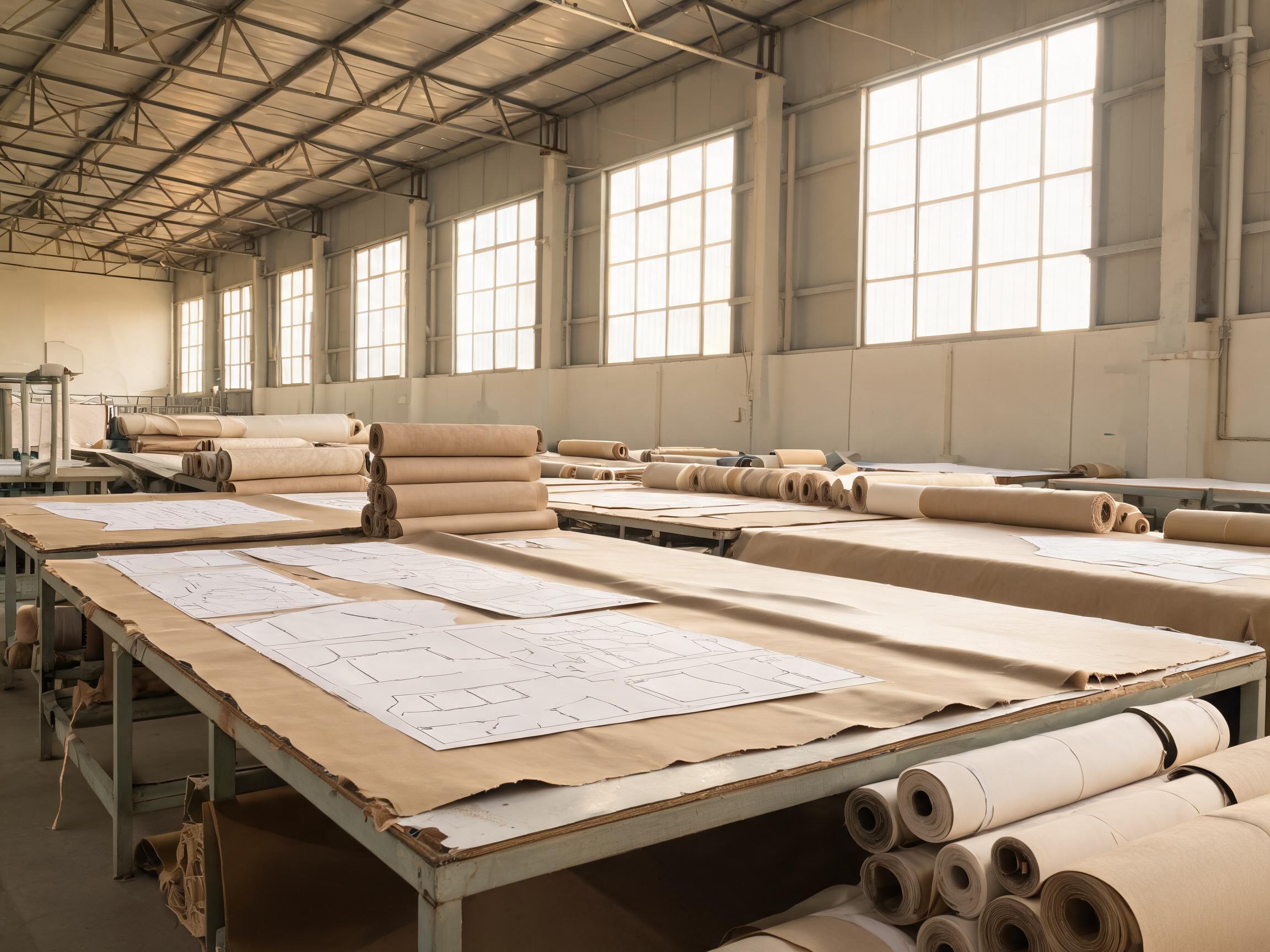
Fabric cutting workshop: fabric rolls and paper pattern layouts on cutting tables.
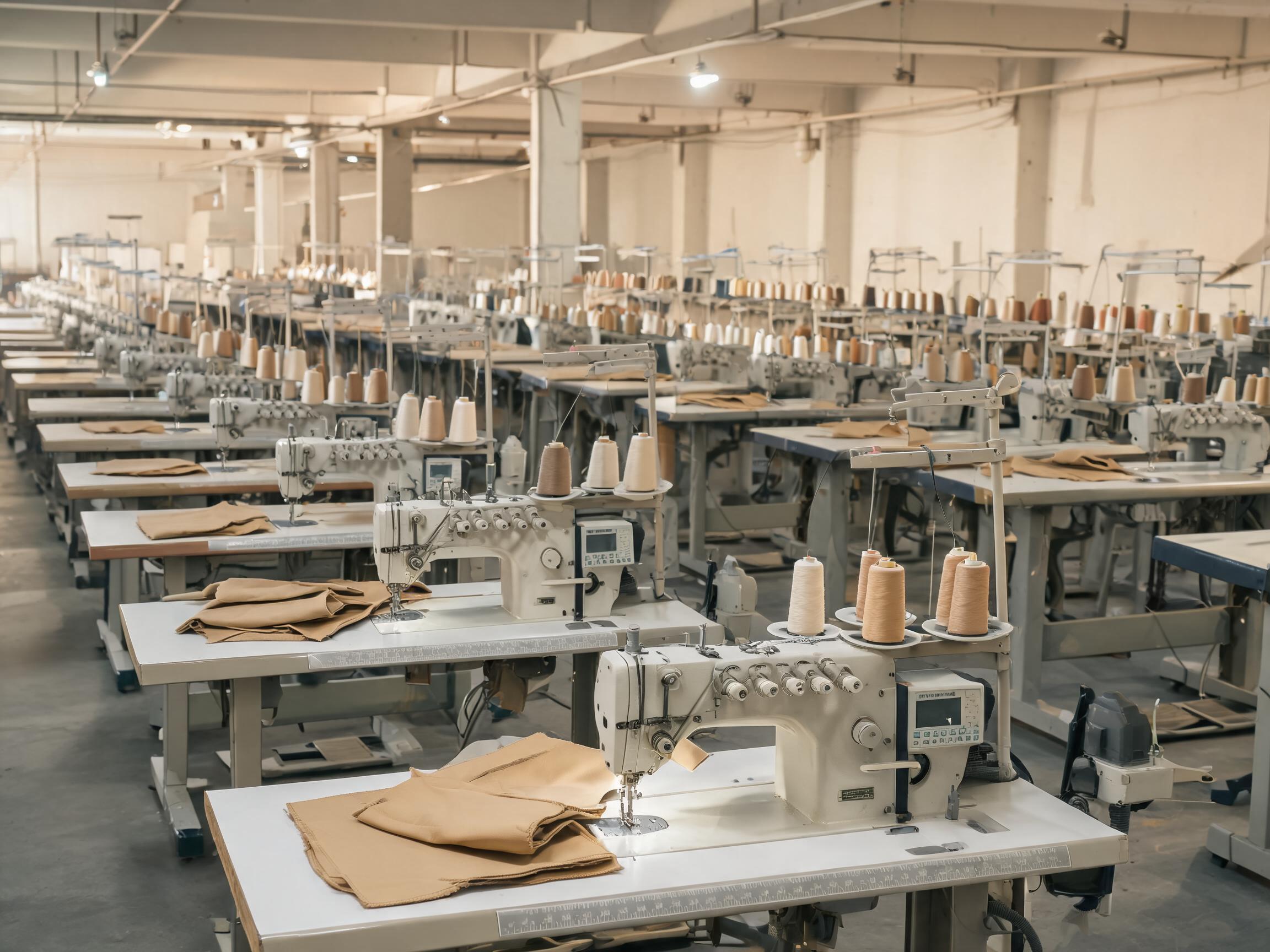
Wellmax operates a 12,000 m² facility with cutting, sewing, assembly, and inspection under one roof, roughly 150,000 pieces per month of total output across its luggage and bag lines, with about 320 staff. Bags run on dedicated sewing lines followed by finished-product inspection before packing. At the company level, the quality management system is certified to ISO 9001:2015 and the facility is audited under the BSCI framework — both are factory-level credentials worth verifying with any supplier you evaluate, along with where their sewing and inspection actually happen.
Before placing an order, Wellmax asks buyers to confirm four things: target dimensions and capacity, fabric specification, color and branding method, and whether third-party inspection will be used plus which Incoterms apply. Treat that checklist as a minimum standard for any manufacturer conversation — a supplier who does not ask these questions before quoting is likely to quote loosely.
Frequently Asked Questions
Can I mix branded and unbranded units in one order?
Branding methods such as woven labels, rubber patches, and screen printing are quoted on request, so whether a mixed run is practical — and at what minimum per branding method — should be confirmed with the team before sampling.
Do I have to start from an existing catalog style?
The documented customization menu works on existing styles, but the in-house design studio develops new styles and prepares samples as part of the ODM cycle, so a fully custom silhouette can be discussed. Tooling implications and minimums should be confirmed per project.
What happens if my logo needs a special fabric or hardware finish?
Color, lining, and hardware are adjustable to brand direction on most styles, but any change that requires new tooling or different material sources may carry related minimums — confirm those specifics before approving a sample.
Request a Quotation to Compare Real Numbers
The fastest way to evaluate a custom backpack manufacturer is to run the same request through several candidates and compare what comes back: a documented customization menu, per-method branding quotes, MOQ and lead-time conditions, and a clear sampling workflow. If you want a benchmark request, browse the backpack range — from the Slim Laptop Backpack 16L to the Outdoor Hiking Pack 40L — pick the styles closest to your market, note your target dimensions, fabric, color and branding method, and contact the export sales team to confirm options, tooling implications, and pricing for your specific program.