Buying Guide
The drawstring backpack is the workhorse of event, promotional and program merchandise: light to ship, cheap to customize, and used everywhere from sports events and trade shows to retail giveaways and school programs. But because the product looks simple, buyers often under-specify it — and discover the difference between a good and a bad drawstring pack only after the event. This guide covers the four decisions that determine quality and cost on a bulk drawstring order: fabric weight, closure system, branding method and the OEM terms you should negotiate.
The four decisions at a glance
- Fabric weight — the biggest cost driver; specify it against expected uses, not the lowest quote.
- Closure system — cord, anchors and hardware decide whether the bag survives the program.
- Branding method — match print technique to artwork and fabric, then confirm on a sample.
- OEM terms — low MOQ is a set of negotiable terms, not a single number.
Fabric Weight: Where Cost and Durability Meet
Fabric weight is the single biggest cost driver on a drawstring bag, and the trade-off is direct: lighter fabric lowers unit cost and packing volume; heavier fabric survives heavier use and takes branding better.
- Lightweight non-woven and thin polyester are the standard choice for single-event giveaways — race packs, exhibition bags, one-day campaigns. They are inexpensive, extremely packable and acceptable when the bag's working life is measured in days.
- Mid-weight polyester is the volume sweet spot for multi-use programs — welcome kits, retail promotions, multi-day events. It holds screen-printed and heat-transferred logos well and survives repeated use.
- Heavy-duty polyester and premium constructions serve programs where the bag is expected to carry real loads — sports kits, outdoor events, resale. Heavier deniers, reinforced bases and better hardware raise the unit cost but change how the bag is perceived.
A practical rule: specify the fabric weight against the number of uses you expect, not against the lowest quote. And when in doubt, ask the factory to produce samples at two adjacent weights — the cost difference is usually small at sample stage and decisive at order stage.
Closure Systems: More Than a Piece of Cord
The closure is what makes a drawstring bag a drawstring bag, and it has three levels of engineering:
- Standard sewn channel with cord: the base construction. The cord runs through a fabric channel; quality depends on stitching density at the channel and knot security at the cord ends.
- Reinforced corners and eyelets: on heavier-duty versions, cord anchors are reinforced — bartacked corners or metal eyelets — because the corner is where drawstring bags fail first under load.
- Cord locks and hardware: toggles and cord locks add usability and a perceived quality step, common in sports and retail-tier bags.
For bulk orders, the specification to lock down is simple: cord diameter and material, anchor construction (sewn channel, bartack or eyelet) and whether hardware is included. These three lines decide whether your bags survive the program or get left behind at the venue.
Branding Methods on Fabric Bags
Drawstring bags take four common branding methods, each with a different cost and look:
- Silk-screen printing: the default for 1–3 spot-color logos; lowest cost per unit at volume, best on flat panels.
- Heat transfer: handles multi-color and gradient artwork with good detail; a strong middle option for photographic or complex logos.
- Sublimation: full-bleed, edge-to-edge printing on suitable synthetic fabrics — the choice for all-over designs and event-branded patterns.
- Woven labels or embroidery: reserved for premium-tier constructions where the bag itself is a branded product rather than a giveaway.
Match the method to both your artwork and your fabric: fine detail and gradients push you toward transfer or sublimation, while bold spot-color logos are most economical in screen print. Confirm the chosen method on a printed sample before mass production — fabric weight affects how each method renders.
How a Drawstring Order Runs Through a Full-Line Bag Factory
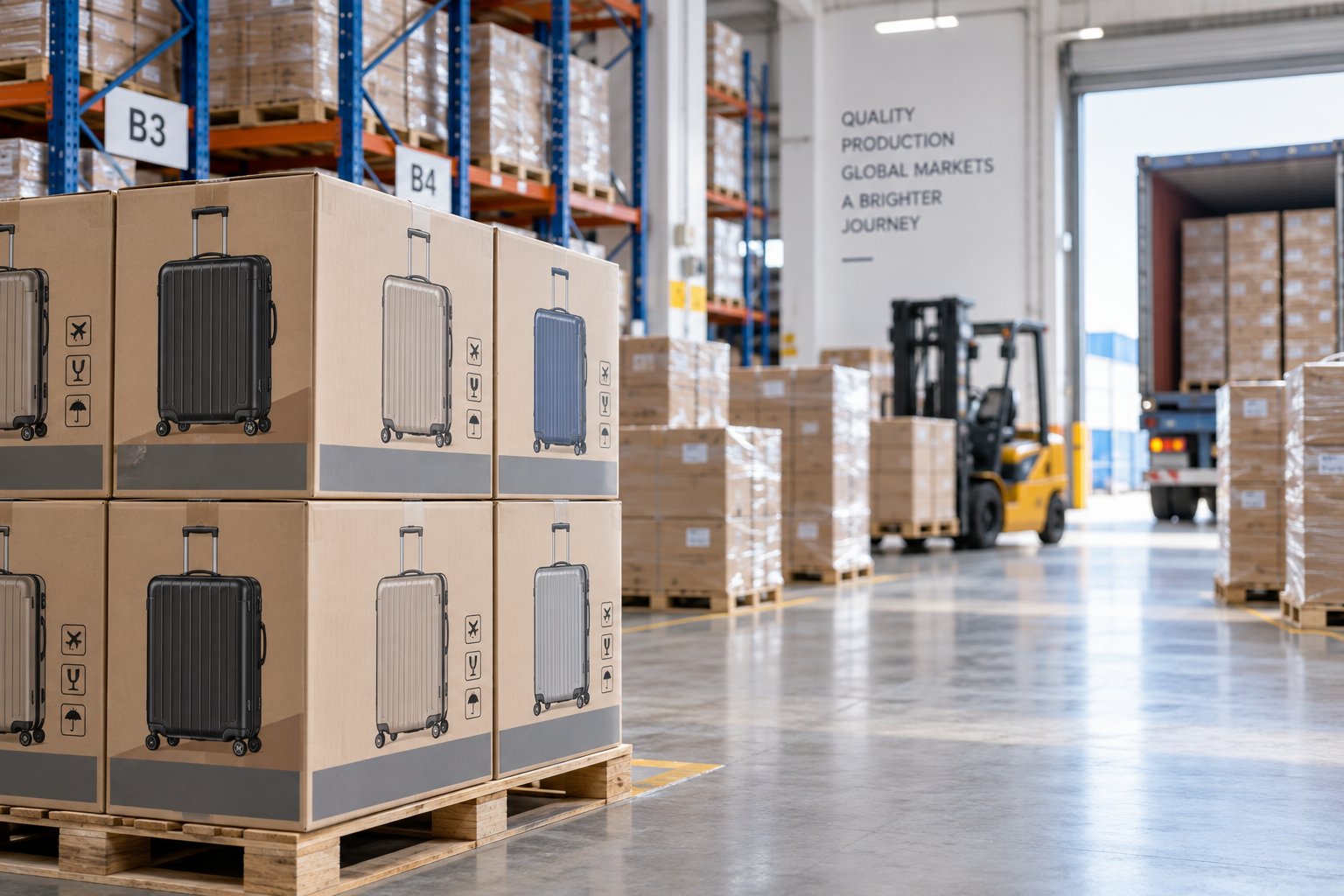
One advantage of ordering drawstring backpacks from a full-category manufacturer rather than a single-product workshop is what surrounds the product. At Wellmax Luggage, an OEM/ODM bag manufacturer founded in 2013 in Fujian, China, fabric cutting, sewing, assembly and finished-product inspection run in one 12,000 m² facility producing roughly 150,000 pieces per month across luggage, backpacks, business bags and handbags — with ISO 9001:2015 certification and BSCI social-compliance auditing.
For a drawstring program, that matters in three ways. First, sampling: the in-house design and development studio prepares samples and material selections, so artwork, fabric weight and closure options can be tested on physical samples before commitment. Second, mixed programs: drawstring bags can ship alongside commuter backpacks or other categories in the same container, consolidating freight instead of adding a vendor. Third, inspection: finished-product inspection stations check goods before packing and shipment, and goods are packed in individual poly bags inside export cartons as standard.
Low-MOQ OEM Terms: What to Negotiate Before You Sign
"Low MOQ" is not a single number — it is a set of terms, and the ones worth negotiating are:
- What counts toward the minimum: whether different colors or print variants of one style combine toward the MOQ, or each variant is counted separately. Combining variants is the usual path to a genuinely low effective minimum.
- Blank versus decorated tiers: some buyers order a base quantity plain and decorate closer to the event; ask how that split is priced.
- Sampling terms: sample cost, whether it is credited against the bulk order, and how many revision rounds are included.
- Packaging: individual poly bag + export carton is standard; confirm packing format if your program needs retail-ready packaging or individual inserts.
- Branding readiness: artwork file requirements per method (screen, transfer, sublimation) and who supplies print-ready files.
Get these terms confirmed in writing with your inquiry — they shape the real cost of the program more than the headline unit price.
FAQ
What is the best fabric weight for event giveaway drawstring bags?
For one-time events, lightweight non-woven or thin polyester keeps cost and shipping volume down. For multi-use programs, mid-weight polyester is the usual choice because it takes branding well and survives repeated use. Test both on samples if your program sits between the two.
Which branding method should I choose for a multi-color logo?
Silk-screen is most economical for one to three spot colors. For multi-color or gradient artwork, heat transfer offers better detail at moderate cost, and sublimation covers full-bleed designs. Confirm the final rendering on a printed sample.
Can I mix colors and prints in one bulk drawstring order?
Usually yes — but whether color and print variants combine toward the MOQ is exactly the term to negotiate with your factory before ordering, rather than after.
Why order drawstring bags from a full-line manufacturer?
You get one quality system, one inspection standard and one shipment that can include other categories in your program — along with in-house sampling through the factory's design studio. It removes an entire vendor from your sourcing chain.
How do we get a quotation?
Send your style direction, expected quantity, branding artwork and destination market to the export sales team; they handle inquiries, quotations and order follow-up for buyers in more than 40 countries. Confirm fabric weight, closure spec and branding method on samples before mass production.
Keywords: drawstring backpack bulk, drawstring bags wholesale, drawstring backpack manufacturer