Bulk Procurement Guide
Clear-bag policies at schools, stadiums, festivals, and secure venues have turned transparent backpacks from a niche item into a recurring bulk order for uniform suppliers, event merchandisers, and retail chains. The demand is straightforward: venues require bags that let staff see contents without opening them, and buyers need a product that looks clean on a shelf or at check-in. But a clear backpack fails faster than an opaque one when material clarity, seam sealing, or hardware finish is wrong, because every defect is visible through the panel.
This checklist covers the specification decisions that matter specifically for transparent backpacks, not generic backpack features. Use it to build a brief, compare supplier responses, and set inspection points before you place a bulk order with a Chinese manufacturer.
- Clear panels expose seam quality, hardware color, and surface defects that opaque fabric hides.
- PVC and TPU behave differently in cold, heat, and folding; the choice should follow the end use, not the lowest quote.
- Zippers, sliders, and pulls are visible through the panel, so hardware color and finish become a design decision.
- Branding on clear panels needs a method that does not cloud the window or crack in use.
- QC for clear bags focuses on visual clarity, yellowing, scratches, and seal integrity, checked under consistent light.
Why clear-bag demand drives bulk orders
Venue security policies create a captive market. When a school district or stadium authority mandates transparent bags, every attendee or student needs one, and the buyer is often a distributor or uniform supplier ordering in cartons rather than units. That shifts the specification conversation: the buyer is not choosing a single bag for personal use but a repeatable item that must arrive consistent across thousands of pieces.
Chinese bag manufacturers with in-house cutting, sewing, and inspection can handle that consistency, but the buyer still has to define what “consistent” means for a transparent product. A clear backpack has no fabric print or texture to mask variation. The panel is the product.
Transparency panel material: PVC vs TPU
The first specification decision is the panel material. Both PVC and TPU are used for clear bags, and they are not interchangeable in feel or handling. Neither should be ordered on the basis of a single word from a supplier; ask what the material is and how it behaves in the conditions your end users will face.
| Consideration | PVC (polyvinyl chloride) | TPU (thermoplastic polyurethane) |
|---|---|---|
| Clarity and surface feel | Generally rigid, glass-like clarity; can feel stiffer | Softer, more flexible; clarity can vary by grade |
| Cold-weather behavior | Can stiffen and become brittle in low temperatures | Typically retains flexibility better in cold |
| Folding and packing | May crease or whiten along fold lines | More tolerant of folding and compression |
| Printing and branding | Compatible with several print methods; surface can be less receptive | Often accepts print well; surface energy varies by grade |
| End-use fit | Indoor school or retail use with moderate handling | Outdoor events, cold climates, frequent folding |
This table is a starting point for a conversation, not a recommendation. Ask the supplier to state the material type and grade they propose, and to explain how it performs in the temperature range and handling pattern of your end users. If your order will ship to a cold climate or be stored in unheated warehouses, that condition belongs in the brief.
Zippers and hardware where visibility matters
On an opaque backpack, a black zipper disappears into the fabric. On a clear backpack, every slider, pull, and seam tape is part of the visible design. Hardware choices affect both appearance and function:
- Zipper tape color. White or transparent tape blends with clear panels; black tape creates a strong graphic line. Specify which look you want, because the supplier will otherwise default to whatever is in stock.
- Slider and pull finish. Metal sliders can show plating wear or corrosion; molded plastic sliders avoid that but may look less premium. Match the finish to the price tier your retail or event channel expects.
- Pull style. Cord pulls, logo pulls, or plain metal pulls are all visible through the panel. If you plan custom pulls, confirm the attachment method and whether it passes a basic pull-strength check.
- Binding and edge tape. The binding around clear panels frames the transparency. Color and width should be specified, not left to the supplier's standard.
Hardware also affects how the bag closes and wears. Ask the supplier to confirm the zipper type (coil or vislon) and whether the slider is metal or plastic, then check a sample for smooth operation before bulk production.
Seam and edge construction
Clear panels are joined to each other and to opaque trim by stitching, high-frequency welding, or a combination. The method matters because a clear bag cannot hide a weak seam behind lining. Inspect samples for:
- Stitch density and thread color on visible seams.
- Whether welded or sealed edges are clean and free of bubbles or gaps.
- Reinforcement at stress points such as handle attachments and strap anchors.
- Edge binding that fully covers raw panel edges without waviness.
If the supplier uses welding, ask how they control temperature and pressure, and whether they inspect seal integrity as part of routine QC. If they use stitching, ask what thread and needle size they specify for clear panel material.
Logo and branding on clear panels
Branding a transparent bag is not the same as branding fabric. Common methods include screen printing, heat transfer, and printed patches or labels on opaque trim. Each has trade-offs on a clear surface:
- Screen printing can give crisp graphics but may crack if the panel flexes; confirm the ink and curing process.
- Heat transfer can produce fine detail but may leave a visible carrier edge on clear material.
- Patches and labels on opaque trim avoid printing on the panel altogether and keep the window clean.
Specify the logo placement, size, and color reference, and ask for a pre-production sample with the actual branding method. Check that the branding does not cloud the panel or create a haze that undermines the “clear” requirement.
Packaging for bulk shipments
Clear backpacks scratch and scuff in transit more visibly than opaque ones. Packaging should protect the panel surface and keep the bags flat or lightly stuffed to avoid sharp creases. Confirm with the supplier:
- Whether each bag is polybagged individually or grouped.
- Whether a protective film is applied to panels and who removes it.
- Carton configuration and whether bags are interleaved to reduce abrasion.
- Whether retail-ready packaging (hang tags, barcodes) is required for your channel.
These details affect labor and material cost, so they belong in the quotation request rather than as an afterthought at shipping.
QC checkpoints specific to clear bags
Transparent products require inspection under consistent lighting, because defects invisible in dim light become obvious under retail display. Build these checkpoints into your pre-shipment inspection:
- Visual clarity: panels free of cloudiness, haze, or flow lines; compare against the approved sample under the same light.
- Yellowing: check panel color against a retained standard; note any batch variation.
- Scratches and scuffs: inspect both sides of every panel, especially near seams and hardware.
- Seal integrity: welded or stitched edges closed and even, with no gaps, bubbles, or loose thread.
- Hardware function: zippers run smoothly, pulls secure, buckles and straps operate without catching.
- Branding quality: print or transfer aligned, crisp, and free of smudging or peeling.
- Cleanliness: no dust, oil, or fingerprints sealed inside the bag or trapped under film.
These are check items, not test values. The acceptance criteria should reference your approved sample and any written specification you agree with the supplier.
What to confirm with the supplier before ordering
Before you commit to a bulk order, get written answers to the points that change cost, appearance, or compliance:
- Material type and grade for the clear panel, and how it performs in your target climate and handling.
- Hardware specifications: zipper type, slider material, pull style, and finish.
- Seam method and the supplier's in-line seal inspection process.
- Branding method, placement, and a pre-production sample with actual branding.
- Packaging format and protection for clear surfaces.
- QC checkpoints and the lighting conditions used for visual inspection.
- Order quantity, production schedule, and shipping terms in writing.
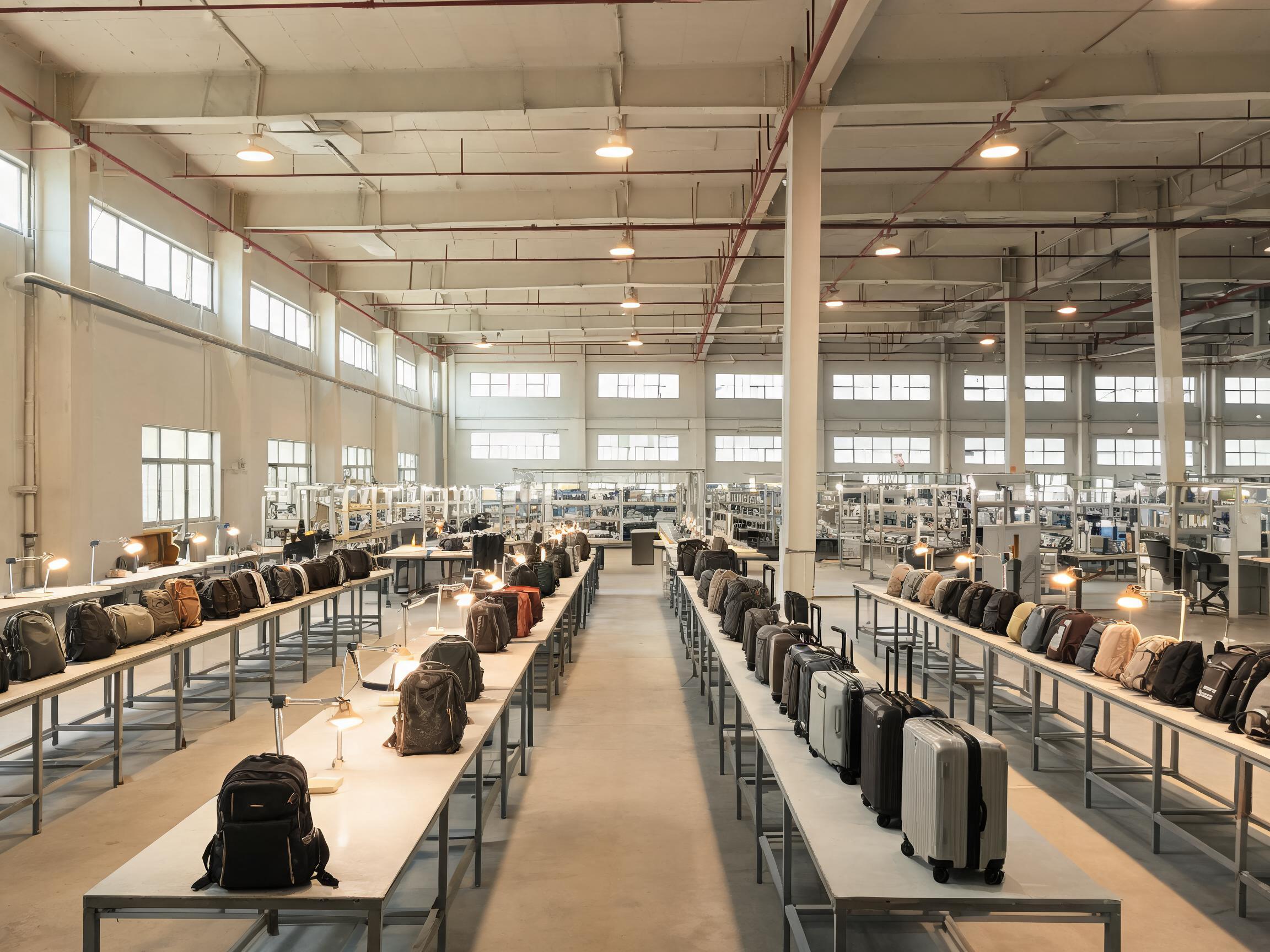
Wellmax Luggage is an OEM/ODM bag manufacturer founded in 2013 in Quanzhou, Fujian, China, with about 320 staff and a 12,000 m² facility that houses cutting, sewing, assembly, and inspection under one roof. The company produces about 150,000 pieces per month and exports to more than 40 countries under an ISO 9001:2015 quality management system covering design, manufacturing, and sales of luggage and travel bags, and is audited under the BSCI social compliance framework. Its in-house design and development studio and dedicated sewing lines support the sampling-to-export cycle, but clear backpacks are not a standard catalog item, so a transparent bag order should be specified and sampled as a custom project.
Use this checklist to structure that project brief. The clearer your specification, the more comparable the supplier's response will be, and the fewer surprises at inspection.