
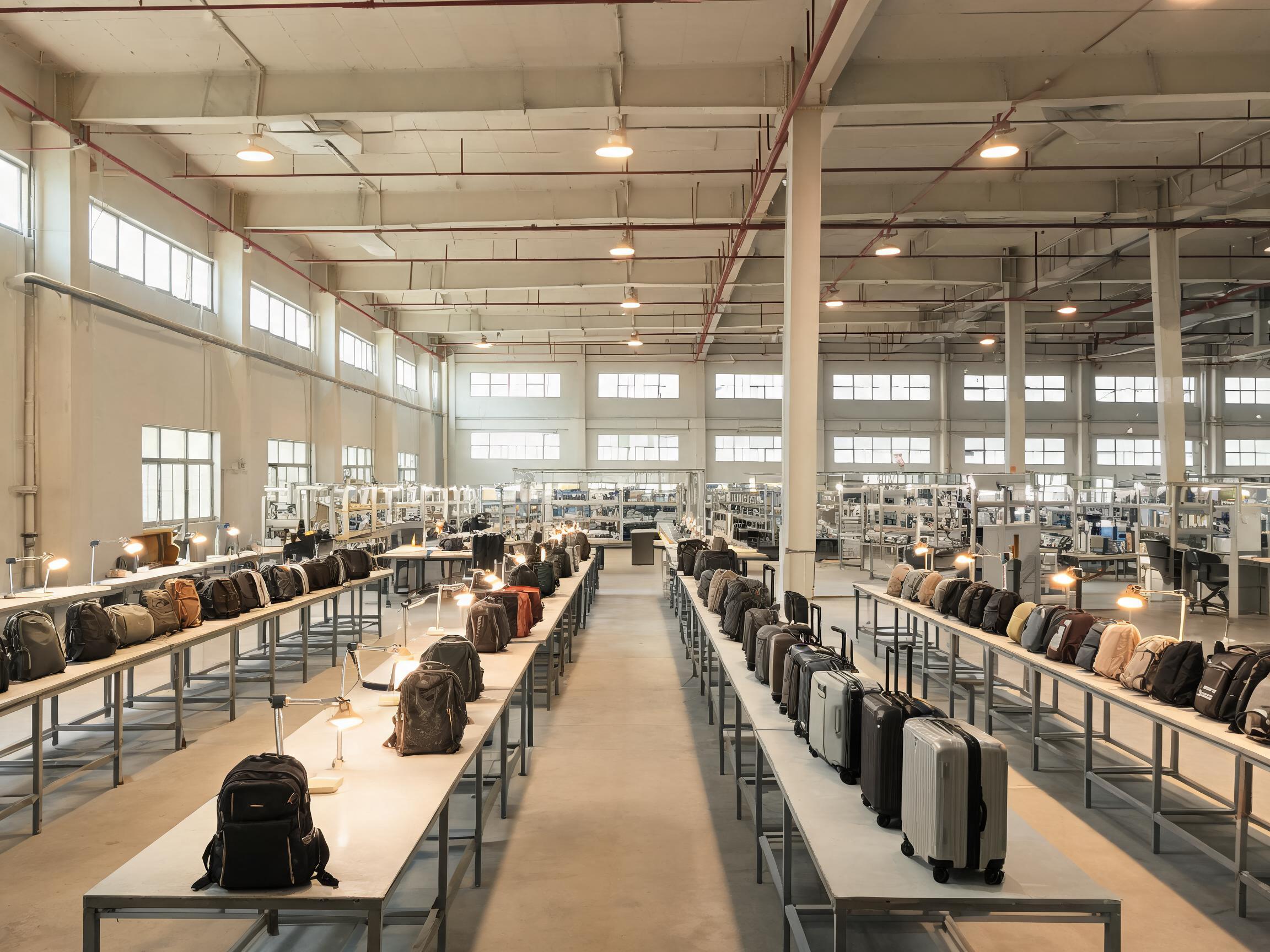
Laptop sleeves look like the simplest product in the bag category, which is exactly why they are hard to source well. A sleeve has no straps, no frame and no hardware to hide behind: the cushioning, the fit and the edge work are the product. This guide covers the specification decisions that matter when you brief a laptop sleeve manufacturer — cushioning construction, shell fabric, interior sizing for 13 to 16-inch devices, zipper and binding details, and the OEM terms you should expect in a quotation.
Why Sleeves Are Quoted as Their Own Program
Sleeve production shares equipment with other soft-goods sewing — cutting tables, straight and zigzag machines, binding folders — but the tolerance discipline is different. A laptop sleeve is a fitted product: a few millimeters of error in the interior panel shows up immediately when a customer slides a device in. That is why experienced buyers treat sleeves as a standalone OEM program with its own size spec, sample round and fit test, rather than as an accessory added to a larger bag order.
Wellmax Luggage, an OEM/ODM bag manufacturer in Quanzhou, Fujian, founded in 2013, builds padded laptop compartments across two proven formats in its current catalog: the Slim Laptop Messenger Bag with a padded dedicated sleeve fitting up to 14 inch, and the Leather Business Briefcase 15.6" Laptop with a padded compartment for laptops up to 15.6 inch. The catalog page for each lists its own MOQ and lead time — 500 pcs and 30-35 days for the polyester messenger, 200 pcs and 35-40 days for the leather briefcase — and in both cases the laptop compartment size, pocket layout and divider positions are listed as customizable. Standalone sleeves are quoted as their own program on the same basis: you supply the device spec and branding requirements, and the factory returns a size chart and sample for approval.
Cushioning: Comparing Memory Foam, EVA and Plush Linings
Cushioning is the core spec of a sleeve. Ask your supplier to quote each of these constructions separately, because cost, weight and protection profile differ significantly:
| Construction | Protection profile | Weight and cost | Typical positioning |
|---|---|---|---|
| Memory foam | Conforms to the device and spreads impact across the surface | Adds thickness and cost | Premium tier, marketed as protective rather than decorative |
| EVA panels or molded EVA frames | Structured shape that holds its form empty; resists compression set | Lighter and more rigid than memory foam | Hard-ish and semi-structured sleeves |
| Plush or velvet lining | A surface spec, not a protection spec — prevents micro-scratches on polished shells | Drives perceived quality more than its cost suggests | Contact layer paired with a structural layer |
- Memory foam conforms to the device and spreads impact across the surface. It adds thickness and cost, and it is the usual choice for premium positioning where the sleeve is marketed as protective rather than decorative. Expect a slightly snugger first-fit that eases as the foam settles.
- EVA (ethylene-vinyl acetate) panels or molded EVA frames give a structured shape that holds its form empty. EVA is lighter and more rigid than memory foam, resists compression set, and is common in hard-ish and semi-structured sleeves. Specify thickness (commonly in the 3-8 mm range at the category level) and ask for a crush test on the sample.
- Plush or velvet lining is a surface spec, not a protection spec — but it drives perceived quality. A soft brushed or velvet interior prevents micro-scratches on polished laptop shells and makes the sleeve feel premium. Request lining hand-feel samples alongside shell samples; the two are usually quoted together.
When you compare quotes, line up the three constructions on the same criteria: protection level (rigid structure versus conforming padding), thickness under the shell, and hand-feel for the customer. A thin memory-foam sleeve can out-cushion a thick EVA shell at the corners, while a plush lining changes perceived value more than its cost suggests. A practical approach for a first program: spec EVA as the structural layer with a plush lining as the contact layer, and reserve full memory-foam construction for a premium tier. Ask whether the cushioning is quilted into the shell, sewn as a separate internal pocket, or bonded — each method affects both cost and how the sleeve looks after repeated use.
Water-Resistant Shell Fabrics
Most laptop sleeves in this category use a water-resistant rather than fully waterproof shell. For a buyer, the useful distinctions are threefold. First, fabric choice: coated polyester and nylon (420D to 1680D denier depending on positioning) repel light rain and splashes; vegan or full-grain leather resists light moisture differently and needs a finish spec. Second, coating method: a PU coating on the back of the fabric is standard, while a separate rain flap over the zipper adds real protection at the opening. Third, the zipper itself is the weak point — a water-resistant coil zipper with coated tape is worth specifying if weather exposure is part of your product claim.
Ask your manufacturer for the fabric's water-resistance test method and rating rather than accepting a generic "waterproof" description on a spec sheet, and match the denier to your channel: lighter deniers for commuter sleeves, heavier deniers where the bag lives in a backpack with other gear. Confirm the coating in writing, including whether it is applied to the shell only or to the lining as well, since that changes stiffness and sewability.
A 13/14/15/16-Inch Size-Fit Walkthrough
Inch labels refer to screen diagonal, not the device body, so two "14-inch" laptops can differ by more than a centimeter in width and depth. A workable fit process:
- Measure the device body — width, depth and thickness — in millimeters, at the widest point including any corner bumps or feet.
- Add clearance for the interior: typically 5-10 mm on width and depth, plus the thickness of the cushioning layers so the device sits without stretching the zipper path.
- Convert that into interior panel dimensions and confirm them with the manufacturer against their cutting spec, then verify on a physical sample with your actual device, not a template.
For a range program (13, 14, 15 and 16 inch), ask whether one shell pattern with interchangeable interior panels covers adjacent sizes or whether each size needs its own pattern. This affects tooling, sampling rounds and ultimately cost per size.
Zipper and Binding Quality Checkpoints
On a sleeve, these are the visible failure points. Put them on the inspection checklist: zipper runs full length without snagging at the corners; sliders and pullers match the hardware spec and branding; zipper tape is sewn flat with no puckering; corner binding is tight, even and trimmed clean; top opening aligns so the flap or zipper closes under slight load; strap attachments, where present, are bar-tacked. Wellmax's production workflow includes zipper function and strap attachment strength checks, and finished-product inspection before packing — worth confirming that these checks apply to your sleeve program's checklist, not only to bag programs.
OEM Terms to Confirm at Quotation
Use the catalog as your anchor for realistic commercial terms. The Slim Laptop Messenger Bag program runs at MOQ 500 pcs with 30-35 days lead time and polybag-plus-carton packing; the Leather Business Briefcase runs at MOQ 200 pcs with 35-40 days and dust bag plus carton. Sampling is part of the order cycle rather than a separate stage — the full cycle runs sampling, tooling, mass production and quality inspection through to export. Customization on the laptop programs covers base fabric and denier, sleeve size, pocket layout, divider positions and branding such as woven labels, embossed marks or debossed and foil logos. Buyers frequently ask about third-party inspection and preferred Incoterms; raise both during quotation so the inspection point and delivery terms are fixed before production starts, not after.
Final Checklist Before You Brief a Manufacturer
Bring to your first RFQ: device dimensions per size, cushioning construction and thickness, shell fabric and coating, lining spec, zipper and hardware details, branding method, target packing format, and your inspection and Incoterm expectations. A factory that answers each line with a specific spec and a sample plan — the way a dedicated OEM/ODM operation with cutting, sewing, assembly and inspection under one roof should be able to — is the one worth sampling with.