Buying backpacks in bulk is a different exercise from buying them by the piece. The buyer's job is not to pick one favorite style; it is to define a program — who receives the backpacks, what they must carry, how long they must last, and how many fit in a container — and then match specifications to that program without paying for features it does not need. This guide walks through the three most common program types, how to tier specifications, and how to plan container loading for wholesale orders.
Key takeaways
- Define the program first (school, corporate or charity), then set the spec tier and capacity.
- Most school and corporate programs fit the 16L–25L commuter and daypack range; travel and outdoor programs run 30L–40L.
- Plan containers around packed carton volume, not order quantity, and confirm usable volume with your forwarder.
Program Type 1: School and Education Programs
School programs live and die on durability per dollar. Hundreds or thousands of units go to students who are not gentle with their bags, so the specification priorities are reinforced stitching at stress points, dependable zippers, and fabrics that survive daily abrasion. Capacity typically sits in the 16L–22L range for younger students and daily book loads — the segment covered by slim laptop backpacks (16L), laptop commuter backpacks (18L) and urban commuter backpacks (22L) in a standard OEM range. If laptops or tablets are part of the program, a padded laptop compartment sized for up to 15.6-inch devices is a spec line worth locking in early.
Program Type 2: Corporate and Employee Programs
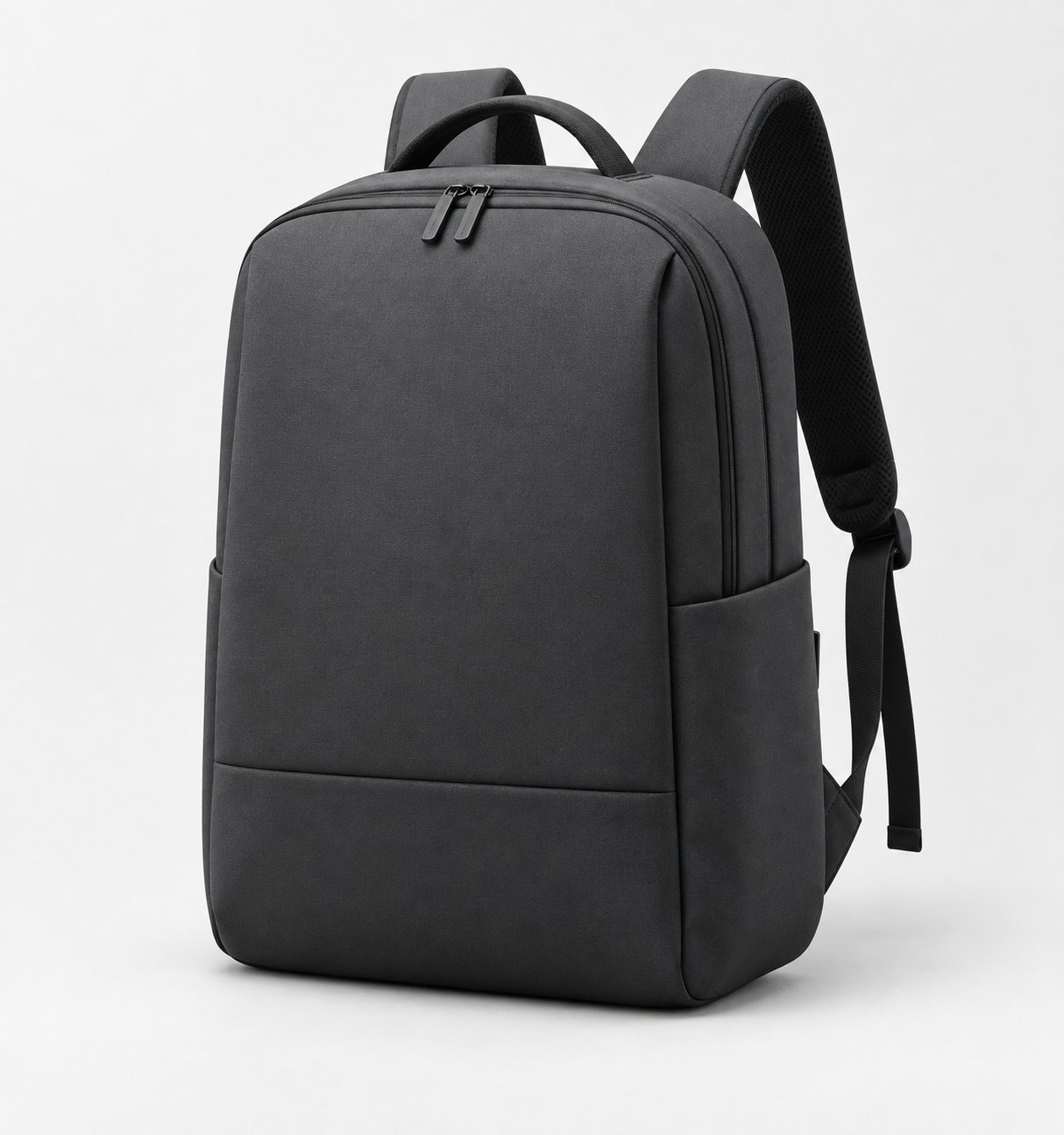
Corporate programs — onboarding kits, sales fleets, conference giveaways — trade on presentation and brand fit. The backpack is a walking advertisement, so color consistency, clean branding placement and a more premium look carry more weight. Water-resistant fabrics matter here because commuters carry them daily: water-resistant nylon in anti-theft commuter styles with hidden zippers, or water-resistant technical daypacks around 25L, match this use case. For executive-tier kits, pairing a business backpack with matching briefcases or laptop totes from the same factory keeps the brand system coherent.
Program Type 3: Charity, NGO and Relief Programs
Charity and relief programs optimize for cost per unit at high volumes, with simpler specifications and maximum packing efficiency. The bags must still survive the journey and daily use — but branding is often minimal, colors are consolidated to cut complexity, and every cubic centimeter of the container matters because the budget buys units, not features. Simple, packable designs at the lower capacity tiers serve this segment best.
Spec Tiers: Matching Features to Program Reality
Rather than agonizing over individual features, tier your program:
- Tier 1 — Volume/basic: standard polyester construction, basic zip closure, essential compartments. Suited to charity giveaways and one-event corporate use.
- Tier 2 — Mid/daily use: water-resistant fabric, padded laptop compartment, improved zippers and back-panel comfort. Suited to school programs and employee commuter kits. This is where most 16L–25L commuter and daypack styles land.
- Tier 3 — Premium/technical: waterproof roll-top construction (30L class), convertible travel designs (35L), and hiking-grade packs up to 40L with load-bearing features. Suited to outdoor retail programs and high-value corporate gifts.
The discipline is to buy the tier the program needs. A charity program does not need roll-top waterproofing; an outdoor retailer should not ship Tier 1 fabric.
Reading the Specs That Actually Matter
Fabric and water resistance
Ask for fabric type and construction (for example, water-resistant nylon versus standard polyester), and what "water-resistant" means for that construction — fabric treatment, coated lining or sealed construction. The difference between a light drizzle spec and a true waterproof roll-top design is significant in both cost and performance.
Zippers, compartments and load
Confirm closure type (standard zip, hidden anti-theft zip, roll-top), the number and purpose of compartments, and whether the laptop compartment size matches the devices in your program (up to 15.6 inch is a common fit in commuter styles).
Quality control checkpoints
A bulk order should specify inspection at defined stages: sample approval before mass production, inline checks during sewing, and finished-product inspection before packing. Factories with in-house inspection stations — standard at a 12,000 m² facility like Wellmax's, which runs cutting, sewing, assembly and inspection under one roof — can integrate these checkpoints into the production plan rather than treating them as an add-on.
Container Planning for Bulk Orders
Container planning starts with packed volume, not order quantity. Standard planning figures for loadable volume are roughly 28 m³ for a 20-foot container, about 58 m³ for a 40-foot container and about 68 m³ for a 40-foot high cube — confirm exact usable volume with your forwarder, as loading efficiency varies.
The working method: obtain each style's packed dimensions and the units per export carton (backpacks are typically packed in individual poly bags inside cartons), compute cartons per container at realistic stacking efficiency, and convert that back into units. Two practical rules:
- Consolidate colors and SKUs where the program allows. Fewer colorways mean fewer changeovers, simpler inspection and denser, more predictable carton counts.
- Plan the container around the program calendar, not just the price break. A half-full 40-foot container shipped on time usually beats a full one that misses the school year or campaign window.
FAQ
How many backpacks fit in a 40-foot container?
It depends on packed dimensions and units per carton, which differ by style and size tier. Get the packed carton dimensions for your specific styles and calculate from there — roughly 58 m³ of loadable volume is the planning baseline for a standard 40-foot container.
What capacity range covers most bulk programs?
Most school and corporate programs land between 16L and 25L; travel and outdoor programs run 30L–40L. Match the tier to the program, not the other way around.
Can different styles be mixed in one bulk order?
Yes. Mixing commuter, daypack and technical styles in one program is common with a full-line backpack manufacturer; confirm how mixed styles affect packing and inspection planning with your factory.
What should we confirm before placing a bulk order?
Sample approval for each style, fabric and zipper specifications, branding method and placement, packing format (poly bag + carton), inspection checkpoints and the production schedule relative to your program date. Confirm all of these in writing with your factory before mass production.
Keywords: bulk backpacks, bulk backpacks wholesale, backpack buying guide