Bulk Buying Guide
Buying bookbags in bulk for a school-supply program is not a one-size purchase. A backpack that works for a second grader fails a high school senior carrying two binders, a laptop, and a water bottle. US buyers who stock a single generic model across all grade bands usually end up with overstock in one size and sellouts in another, plus a returns pile driven by fit and durability complaints rather than price.
The practical fix is to segment your assortment by grade band before you talk quantities with an OEM. This guide walks through what capacity and load specifications make sense for elementary, middle, and high school programs, then maps a stocking timeline that works backward from the June through August peak, when back-to-school demand concentrates.
Key takeaways
- Segment by grade band to cover ages five to eighteen with the fewest SKUs.
- Plan roughly 15-20L for elementary, 20-25L for middle school, and 25-30L or more for high school.
- Middle school is where fit and durability returns concentrate — strap anchoring, back-panel structure, and zipper quality earn their cost there.
- Work backward from your first selling date: arrive-by date, ocean and customs buffer, production window, sample approval, then artwork and spec lock.
In this guide
- Why grade bands matter in volume programs
- Capacity and load guidance by grade band
- Features that reduce returns, band by band
- A back-to-school stocking timeline, working backward
- What to confirm with your OEM before committing
- Building a grade-banded assortment with a full-range partner
Why Grade Bands Matter in Volume Programs
School districts, retail chains, and promotional buyers all face the same constraint: shelf and warehouse space is finite, but the user base spans ages five to eighteen. Sizing by grade band lets you cover that range with the fewest SKUs. It also aligns your assortment with how children physically carry weight — a smaller torso and lighter book load in early elementary versus a near-adult load in high school.
When evaluating an OEM supplier, look for a backpack line that spans the full range rather than a supplier who only makes one size class. Wellmax Luggage, an OEM/ODM luggage and bag manufacturer founded in 2013 in Quanzhou, Fujian, produces backpacks in real capacities of 16L, 18L, 20L, 22L, 25L, 30L, 35L, and 40L, with features such as padded laptop compartments, water-resistant fabrics, hidden anti-theft zippers, roll-top closures with welded seams, ventilated back panels, and reinforced stitching. A line like this gives a buyer room to build a grade-banded assortment — and to add specialty variants — without switching factories mid-program.
Capacity and Load Guidance by Grade Band
The ranges below are starting points drawn from common US school patterns. Books, devices, and supply lists vary by district and state, so treat them as guidance to validate against your local curriculum load, not fixed rules.
| Grade Band | Suggested Capacity | Typical Load Pattern | Features That Matter |
|---|---|---|---|
| Elementary (K-5) | Roughly 15-20L | One or two folders, lunch box, small water bottle, occasional library book | Lightweight construction, easy-open zippers sized for small hands, adjustable straps, simple front pocket |
| Middle school (6-8) | Roughly 20-25L | Multiple subject folders, a binder or two, pencil case, larger water bottle | Padded, structured back panel, reinforced stitching at strap anchors, water-resistant fabric, side bottle pocket |
| High school (9-12) | Roughly 25-30L or more | Two or more large binders, 15-16" laptop, chargers, water bottle, sports gear on some days | Padded laptop compartment, ventilated back panel, heavier-duty zippers, reinforced base and seams |
A few notes on the table. The elementary range assumes daily carry, not overnight gear; if your program includes after-school activities, consider leaning toward the top of the range. Middle school is where returns spike in most programs: the load nearly doubles from elementary, so this is the band where strap anchoring, back-panel structure, and zipper quality earn their cost. High school buyers often want a laptop compartment even when the school doesn't issue devices, because many students carry their own; padded sleeves and a water-resistant shell are reasonable specifications to request in samples.
Features That Reduce Returns, Band by Band
Returns in bulk school-bag programs rarely come from style complaints. They come from function. Specify against the known failure points:
- Straps and anchor points. Ask about bar-tack or reinforced stitching where straps meet the body, and request strap-width and padding specs per size class. A 16L bag for a seven-year-old needs narrower, well-padded straps; a 30L high school bag needs wider, load-bearing ones.
- Zippers. Zipper failure is a top complaint in school bags. Discuss zipper grade and puller size with your supplier — larger pullers help younger children, while heavier coil zippers suit the 25L-plus range.
- Water resistance. Water-resistant fabrics protect homework and devices during rainy commutes. For younger grades, full waterproofing may be unnecessary weight; for laptop-carrying high schoolers, it is a selling point worth specifying.
- Back panels. Ventilated or structured back panels improve comfort for heavier loads in middle and high school. For elementary, a simple soft panel keeps weight and cost down.
- Reflectivity. Reflective strips or piping are a common district requirement, especially for elementary programs. Confirm whether your customer's tender or retail spec calls for them before artwork is finalized.
- Anti-theft and security details. Hidden zippers and secure compartments appeal more to high school and campus-adjacent buyers than to elementary programs.
Present these as options to build into your spec sheet with your OEM, then verify them on physical samples rather than accepting catalog claims.
A Back-to-School Stocking Timeline, Working Backward
Nearly all US back-to-school demand lands in a compressed June through August window: district tenders and charity fills place orders in spring, retail sells hardest in July and August, and late deliveries miss the season entirely and become next year's markdown. The reliable way to plan is to start from your in-store or in-hand date and work backward through five milestones.
- June-August: peak demand window. Goods must be received, distributed, and shelf-ready. Anything arriving after mid-season is discounted inventory.
- Arrival buffer. Work backward from your first selling date and reserve buffer for ocean transit, customs clearance, inland freight, and receiving. Ocean schedules in peak season are volatile; build in slack rather than assuming best-case transit.
- Production window. Mass production must complete before goods ship. Confirm with your supplier when your volumes fit their production calendar — peak season capacity at any factory is booked early, and 150,000 pieces per month at Wellmax still gets allocated to whoever committed earliest.
- Sample approval. Before production, you need a physical sample carrying real book loads, tested for strap comfort, zipper function, and fit at your chosen capacities. Include time for one revision round if the first sample misses.
- Artwork and spec approval. Colorways, logo placement, fabric choices, and packaging must be locked before sampling begins. This is the cheapest point to change your mind and the last point where changes don't cost time.
The earlier in this chain you start, the more options you keep. Buyers who begin the conversation in the fall or winter for the following back-to-school season can negotiate on design and features; buyers who start in spring are negotiating on availability.
What to Confirm With Your OEM Before Committing
Before signing a bulk bookbag order, put these points in writing with any supplier you're evaluating:
- A full size spec sheet per SKU — dimensions, capacity, weight, materials, and hardware — not just a catalog photo.
- Sample testing with real loads. Load samples with the actual book and device weight for each grade band and carry-test them, or have the supplier document the load the design is intended to carry.
- Quality system and compliance. Ask what the factory's quality management covers and what social-compliance audits they hold. Wellmax operates under ISO 9001:2015 certification covering design, manufacturing and sales of luggage and travel bags, and holds a BSCI social compliance audit — credentials worth verifying at any supplier, since many US retail and district buyers require them from vendors.
- The color and logo plan. Confirm how many colorways and how logo application (print, embroidery, woven label) affect cost per piece across quantities.
- Packaging and labeling. Poly-bag requirements, hangtags, UPC placement, and carton packing for your distribution method — district warehouses and retail DCs have different handling standards.
- Export experience. Confirm the supplier handles export documentation and has shipped to your market before; Wellmax currently serves buyers in more than 40 countries, which is the kind of track record to ask about.
Building a Grade-Banded Assortment With a Full-Range Partner
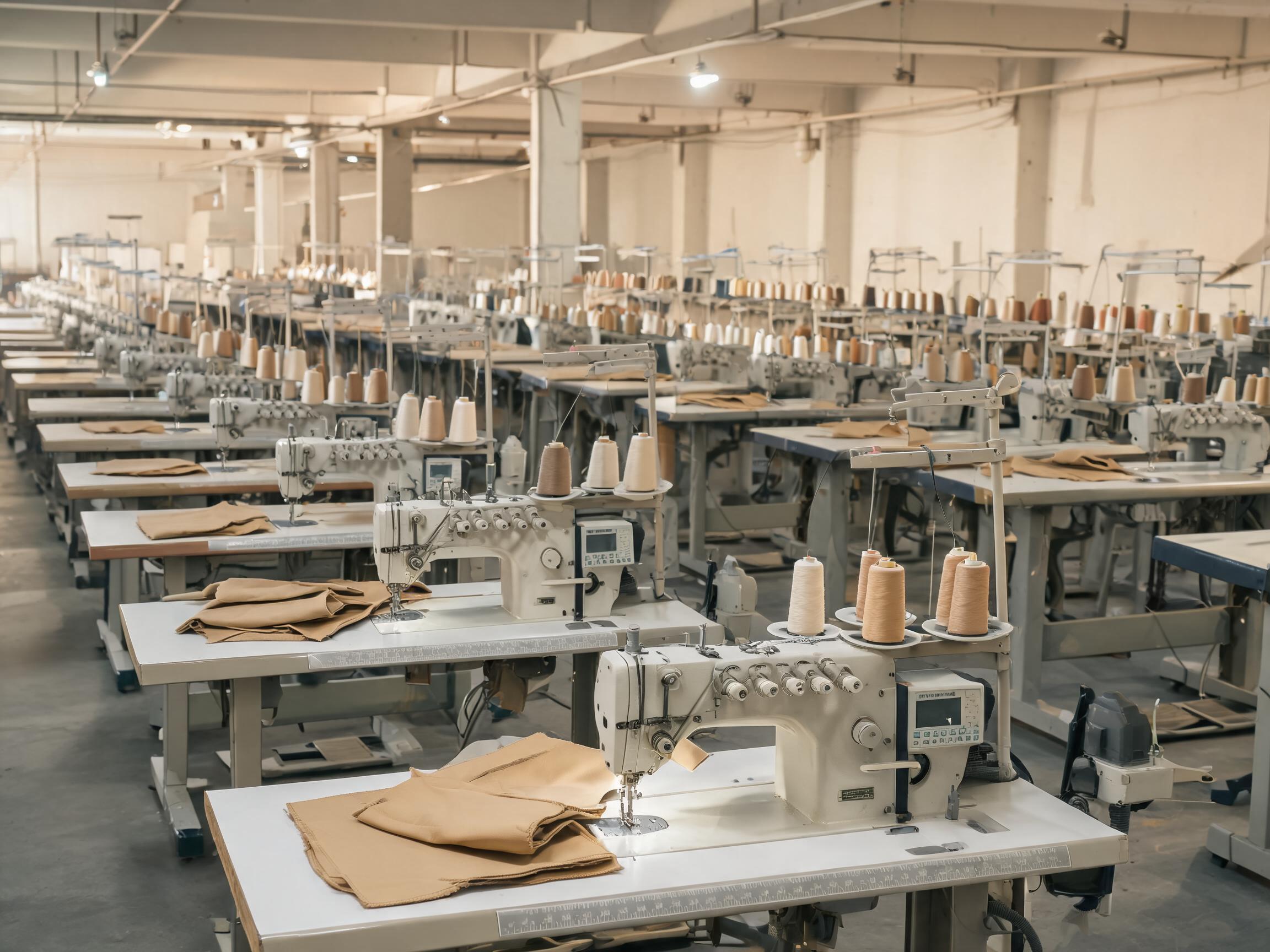
A grade-banded bookbag program is simpler to manage when one factory can cover the whole range. Wellmax's backpack line spans 16L through 40L, and as an OEM/ODM manufacturer with cutting, sewing, assembly, and inspection under one roof across a 12,000 m2 facility of about 320 employees, it supports the full order cycle from sampling through tooling, mass production, quality inspection, and export. Beyond backpacks, its product categories include travel luggage, handbags, and business and laptop bags — relevant if your program later extends into teacher or staff bags.
If you're planning a school-supply program for the next back-to-school season, the Wellmax team is glad to discuss capacity splits by grade band, sample specifications, and a production calendar that fits your delivery window. Reach out early — in this category, the calendar is the hardest constraint.